Jacey Bowers:
If we have temperatures that are very, very low, there are certain things that like the cold and are going to do well. Things in my brassica region, right? I have my cauliflower Romanesco. I have my beets, my cabbages, my kales, my carrots. These things are going to do very well and even like colder temperatures.
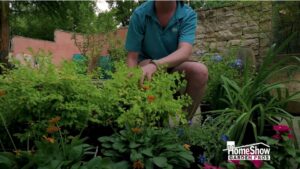
For example, let me show you this. See, this is a carrot, right? I have the beautiful orange, right? But this is not ready. I will know when it’s ready because this orange will be popping out at the top right here when she’s ready. Similarly, this cauliflower, it will let me know when it’s ready when the head has completely formed. But right now, we’ve probably still got about a month to go. I’ve got cabbages and Romanesco cauliflower here as well, which they all get pretty darn large.
Things like this we do not have to cover and they even like the cold. Now, things like my tomatoes, those are going to go. Things that we’re experimenting with in the fall, like cucumbers, tomatoes, things of that nature, please do not get upset if they die. If and when they die. I mean, we’re trying them at a very different time of the year. I’m a huge fan of doing peas and things of that nature.
But when you ask me, “Jacey, when do I harvest them?” Typically, most plants need roughly 60 to 90 days. If we want to be pretty sure, let’s just say 75. Roughly 75 days at a minimum. If you’re not able to count those days down yourself, I encourage you to just be mindful and watch your plants. You know when a cabbage head is forming, but do we know when it’s ready? These are better questions. If you’re not able to figure out and define your exact amount of time, then you’re going to go based off of what you see and also experimenting. But your brassicas are things that are going to do well in the cold.
Also, oftentimes, last thing, is I will take a piece, say, like from this cauliflower that’s not going to do anything. But it’s a beautiful leaf. High in nutrients. All I’m going to do is turn this over and lay it back down and that’s going to feed my soil again. So everything is reused back into nature. Plant on.